María Elvira Roca will give a lecture on Baroque art at the “Misiones de Chiquitos” Festival.
2 April, 2026
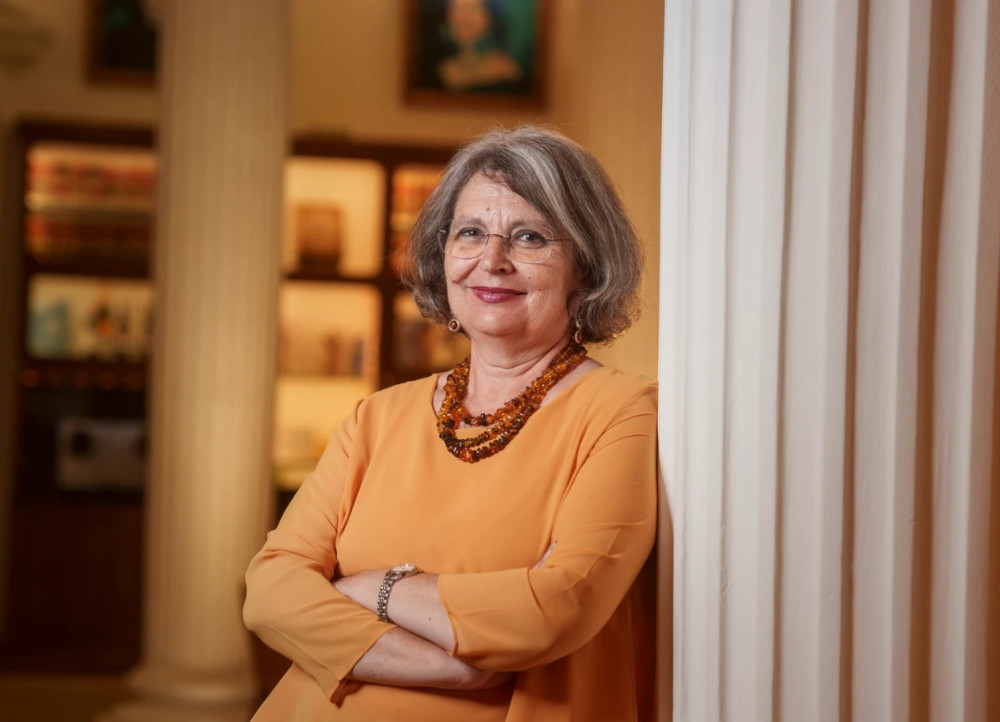
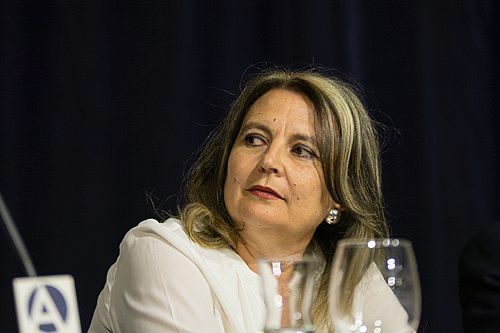
Spanish historian, essayist, and professor María Elvira Roca Barea will deliver a lecture focused on her research on the history of Spain and the concept of the “Black Legend.”
As part of the 15th International Festival of American Renaissance and Baroque Music “Misiones de Chiquitos”, the Fundación Nacional Vida Segura is organizing a keynote lecture in two sessions by María Elvira Roca Barea, a renowned Spanish historian, essayist, and professor, noted for her research on the history of Spain and the concept of the “Black Legend.”
The event, open to an audience willing to hear a different perspective on the conquest and colonization of America, will take place on Saturday, April 18, starting at 11:00 a.m., at the facilities of Grupo Nacional Vida (Av. Cristóbal de Mendoza No. 333, 2nd ring, corner of Av. Alemania).
According to Julio César Caballero, executive director of the Fundación Nacional Vida Segura, María Elvira Roca’s position presents a perspective that contrasts with the Black Legend, which has been disseminated since the 16th century against Spain and its empire. “She manages to describe details of the history of America that are often, sometimes deliberately, ignored or ideologically minimized. These are facts she has recovered in her studies and that definitely constitute part of the truth,” he stated.
The first session, titled “Different systems of integration during the Habsburg period: the reductions,” will address the various formulas that promoted mestizaje and the integration of Amerindian populations in the Americas. It will analyze the pacts, agreements, and legal mechanisms that drove this process, as well as the encouragement of marriages between Spaniards and Indigenous peoples. The lecture will conclude with a review of the origin, development, and achievements of the reductions, including the extraordinary legacy of Baroque music in the Chiquitania region.
After a break, the second session, “Bolivian viceregal Baroque music as a meeting of civilizations,” will take place. This segment will reflect on the role of music as an integrating language, highlighting the originality of the coexistence model promoted in the Jesuit reductions. It will also address the system of musical education, its main achievements—especially in present-day Bolivian territory—and the reasons for its subsequent neglect, though not its disappearance.
Trained at the University of Málaga, where she earned degrees in Classical Philology and Hispanic Philology, as well as a PhD in Medieval Literature, Roca Barea furthered her studies at the François-Rabelais University of Tours, specializing in language, literature, rhetoric, and paleography.
Throughout her career, she has worked as a secondary school teacher in public education, a researcher, a lecturer at international universities such as Harvard, as well as a speaker and columnist in media outlets such as El País and El Mundo in Spain.
Her best-known work is Imperiophobia and the Black Legend (Los Libreros Recomiendan Award 2016), an influential and controversial essay that analyzes the construction of the negative image of Spain and other empires throughout history. She is also the author of Fracasología: Spain and Its Elites: From the Afrancesados to the Present Day (Espasa Award 2019) and the novel The Witches and the Inquisitor (Primavera Award 2023).
The International Festival of American Renaissance and Baroque Music “Misiones de Chiquitos” will take place from Friday, April 17 to Sunday, April 26. In line with its commitment to strengthening culture, the Fundación Nacional Vida Segura supports the organization of this important event.